
The Pilgrim’s Progress of the Sisters
Little WomenThe sisters’ childhood allegory evolves from play into a framework for interpreting temptation, loss, duty, and spiritual hope.
increasing Bearing strength in each event
 decreasing
Bearing strength in each eventdecreasingChildhood Pilgrims

Burdens Become Visible
A Familiar Allegory
The sisters remember traveling from the City of Destruction toward the Celestial City. Their childhood game gives symbolic form to everyday frustrations.
A Serious Recasting
Mrs. March teaches that the journey represents real moral life. The girls’ burdens are not removed; they are made bearable by purpose.
The Palace Beautiful

Hospitality as a Gate
Fear of Wealth
The Laurence mansion initially appears to the sisters as a palace guarded by pride, class difference, and shyness.
Mutual Welcome
James Laurence and Theodore Laurence gradually convert the mansion into a place of music, gifts, and fellowship. The palace is entered not by wealth but by gratitude and trust.
The Delectable Mountain

Dreams from a Height
Shared Vision
The sisters and Theodore Laurence climb the hill they call the Delectable Mountain. From it they imagine the futures they hope to inhabit.
Distance and Desire
The view unites worldly ambition with spiritual longing. Their castles remain uncertain, but the act of imagining them creates intimacy and direction.
The Valley of the Shadow

The Last Crossing
A Shared Fear
Elizabeth March recognizes that her illness is becoming fatal and prepares to leave the family. Josephine March resists, while Elizabeth March seeks to soften the separation.
Faithful Passage
The family learns to regard death as a passage rather than annihilation. The Valley of the Shadow becomes a place of grief, patience, and spiritual preparation.
The Pleasant Meadow
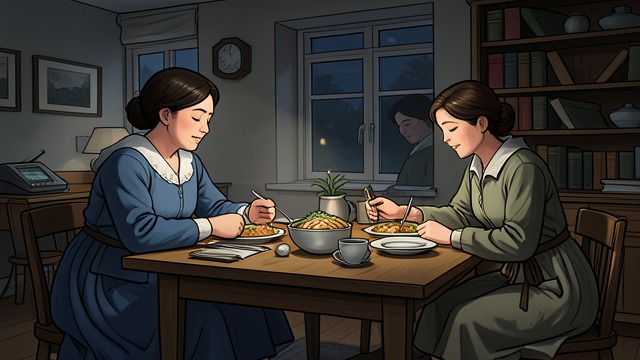
Rest Before Further Travel
Temporary Peace
After illness and war, the family gathers around Mr. March in a home briefly restored to wholeness. Elizabeth March’s fragile return makes ordinary happiness precious.
Continuing Pilgrimage
The sisters understand that rest is not the end of the journey. The Pleasant Meadow represents gratitude before future sorrow, work, marriage, and separation.
the first Christmas evening
after the Laurence friendship begins
late summer
Elizabeth March’s final illness
the Christmas after Elizabeth March’s recovery
